Understanding Bolt Grades

Bolt grades serve the important purpose of communicating the mechanical properties of bolts. In this way, properties of fasteners such as strength, safety, reliability, consistency, and cost-effectiveness can be matched to required applications to achieve an optimal result. Like all things with nuts and bolts, things can be a little complex! In this article, we review bolt grade systems - what they are, how they work and how they differ from each other. Let's check it out!

Bolt Grades Overview

Bolts come in many different shapes and sizes. They're made of a variety of materials for a range of purposes. To understand their capabilities and determine the applications they are suitable for, they are assigned grades, which are like ratings that explain their properties.

The grades they are assigned come from standards (or systems). These standards are not identical - they are developed by different nations and industries to evaluate and present information about fasteners. Examples of different standards include:

ISO (International Organization for Standardization)
ASTM (American Society for Testing and Materials)
AS (Australian Standards)
DIN (Deutsches Institut für Normung)
BS (British Standards)

When you're talking about bolt grades, it's important also understand which standard it relates to, in order to properly understand what it means.

What do Grades Indicate?

Bolt standards help engineers and builders make informed decisions about which fasteners to use in different situations. Different standards provide different sets of information about fasteners, but generally they are concerned with strength, tensile strength, yield strength, materials, application suitability, performance under load, durability compatibility, and safety.

Which Grade is Best?

With fasteners, it's important to understand that suitability is more important than cost. In other words, you don't need the most expensive fastener - you only need the fastener which is mechanically suitable for the application. Since grades describe the properties of fasteners, the best grade is relative to the application.

Which Standard Should I Use?

Standards are not uniform in their conclusions. They are all essentially trying to resolve the same problem (the correct fastener to use, and how to use it) in ways that reflect the local (or industry-specific) practices and regulations, and heritage of practice. Accordingly, it's important to refer to the most current and relevant standards to ensure proper selection, installation, and performance of fasteners - it will depend on what you're working on and where you are working on it. If you're not sure, simply ask our team. We are here to help!

Read more →

Using Steel in a Marine Environment

Marine environments are particularly harsh environments for steels, due to the corrosive nature of the elements contained in seawater. In this brief article, we examine the causes of corrosion, and look at the best types of steel to use in a marine environment. 

Read more →

What are High Tensile Fasteners?

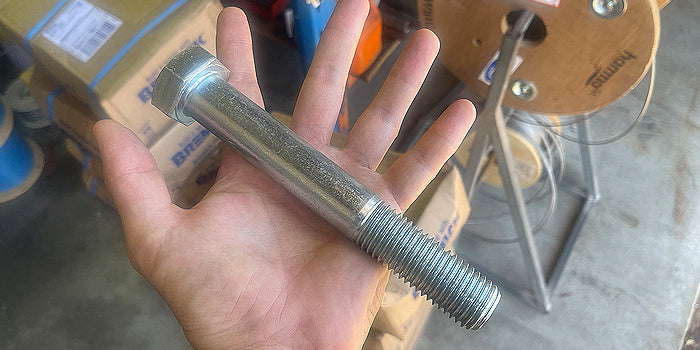
Large high tensile bolt

What are high tensile fasteners? They are a specific type of fastener designed to withstand high levels of stress and tension. ‘Tensile strength’ refers to the ability of a material to resist forces without breaking or permanently deforming, and accordingly, high-tensile nuts and bolts represent a particularly strong type of fastener. This doesn’t always mean they’re the best option. Like all situations, the correct solution will depend on the engineering requirements of your project to assess and determine the correct type of fasteners for the job. On this page, we look further into High Tensile options to explore this important type of fasteners. For fasteners on the Sunshine Coast, please contact our team for a quality range of high tensile products in different grades and thread pitches. 

How are High Tensile Fasteners Different from other Fasteners?

Generally, fasteners are differentiated by the materials they are made with, the process by which they are made, the fastener dimensions, the measurement system (metric or imperial) and the thread pitch (course or fine). With that in mind, the difference between high tensile fasteners and other types of fasteners include:

Materials:

High tensile fasteners are made from carbon or alloy steel. Other types of fasteners are made from different metals; for example, stainless steel fasteners are made from a variety of stainless steel alloys, and titanium bolts from titanium. 

Process:

High tensile fasteners are heat treated to achieve their tensile strength. This process achieves strength by reducing internal stresses in the material, reducing brittleness, hardening and toughening. While other types of fasteners may also be heat treated, it is a mandatory aspect of high tensile bolts with a view to achieving enhanced strength. 

Dimensions

Bolts come in a wide range of shapes and sizes. Some of the characteristics which may be seen in high tensile bolts that differentiate them from lower strength bolts include a thicker shank & larger head diameter, although these larger aspects are not necessarily indicative of a high tensile bolt. 

Thread Pitch

While high tensile bolts are available in both course and fine thread pitches, fine thread pitche offers greater strength, higher resistance to vibration, better precision, and versatility (a fine thread pitch is more suitable for smaller diameter bolts). Fine thread pitches are commonly used in automotive bolts for these reasons. 

System

Bolts are available in metric and imperial systems, and high tensile fasteners are no exception. The system is important because when matching a bolt, the system must also be matched to ensure an accurate fit. Bolt-In Co stocks high tensile bolts in both metric and imperial systems, in course & fine thread pitches (metric) and UNF / UNC threads (imperial). 

When to Use High Tensile Fasteners

High Tensile Bolt Sunshine Coast

High tensile fasteners are used when superior strength and durability are necessary. Examples of high tensile fastener applications include:

Structural Applications

Infrastructure construction projects like bridges & buildings may utilise high tensile fasteners. 

Automotive & Aerospace

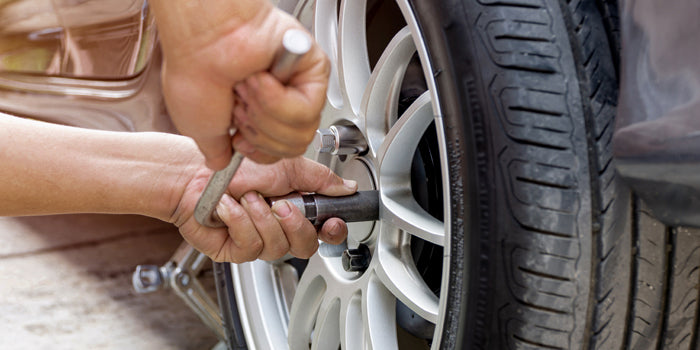
With high levels of stress and vibration, automotive and aeronautical engineering relies on high tensile fasteners. As mentioned above, a higher thread pitch is often utilised for a stronger result. 

Heavy Machinery & Equipment

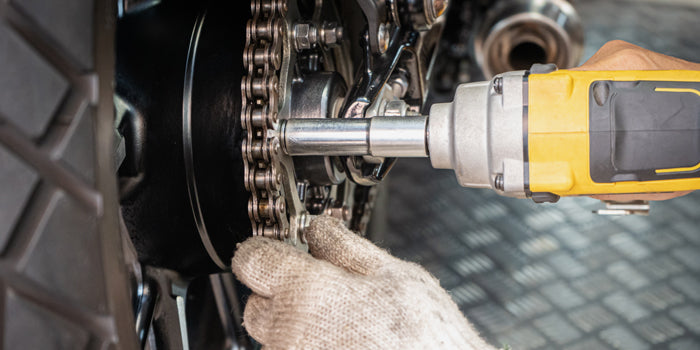
The machinery and equipment utilised in industries such as mining, agriculture and construction utilise high tensile bolts, where high levels of stress and vibration are also a factor. 

Marine Applications

High Tensile fasteners may also be used in offshore and marine applications where high levels of stress, tension and vibration require a stronger fastener. 

When not to Use High Tensile Fasteners

Using high tensile fasteners should only be done when necessary - otherwise, they may be a more expensive solution for a project that doesn’t require them. Examples of when high tensile may not be the best solution include:

Low-Stress Applications

There are many less expensive fasteners which are suitable for low-stress applications. 

Corrosive Environments

Balancing the need for strength and corrosion resistance will depend on the specific application. Stainless steel fasteners offer a higher level of corrosion resistance than high tensile fasteners. 

High Temperature Environments

High tensile fasteners may lose their strength and durability at high temperatures. In these cases, titanium or nickel alloys may be more appropriate solutions. 

Bolt-In Co High Tensile Bolts

Grading the Strength of High Tensile Bolts

The SAE (Society of Automotive Engineers) grading system is a common system use to grade high tensile bolts. This system uses a numeric grade to indicate the tensile strength. The higher the grade, the stronger the fastener. It’s not the only system used. Other systems, such as ASTM (American Society for Testing and Materials) is another example. 

High Tensile Fasteners at Bolt-In Co

Enquire with Bolt-In Co Sunshine Coast for the fasteners for your project. We have a wide range of high tensile in stock, and can easily order products in if we don’t stock them (depending on quantity). 


Read more →

About Wire Rope Balustrading

Learn about balustrading with wire rope with Bolt-In Co on QLD's Sunshine Coast. What's involved, what products you need, why swaging is important, and much more!

Read more →